Private power pole responsibility on the Northern Beaches: what owners need to know
Who owns the power pole on your Northern Beaches or Pittwater block, what you're responsible for, how to spot problems, what a defect notice means and your options for replacement or removal.
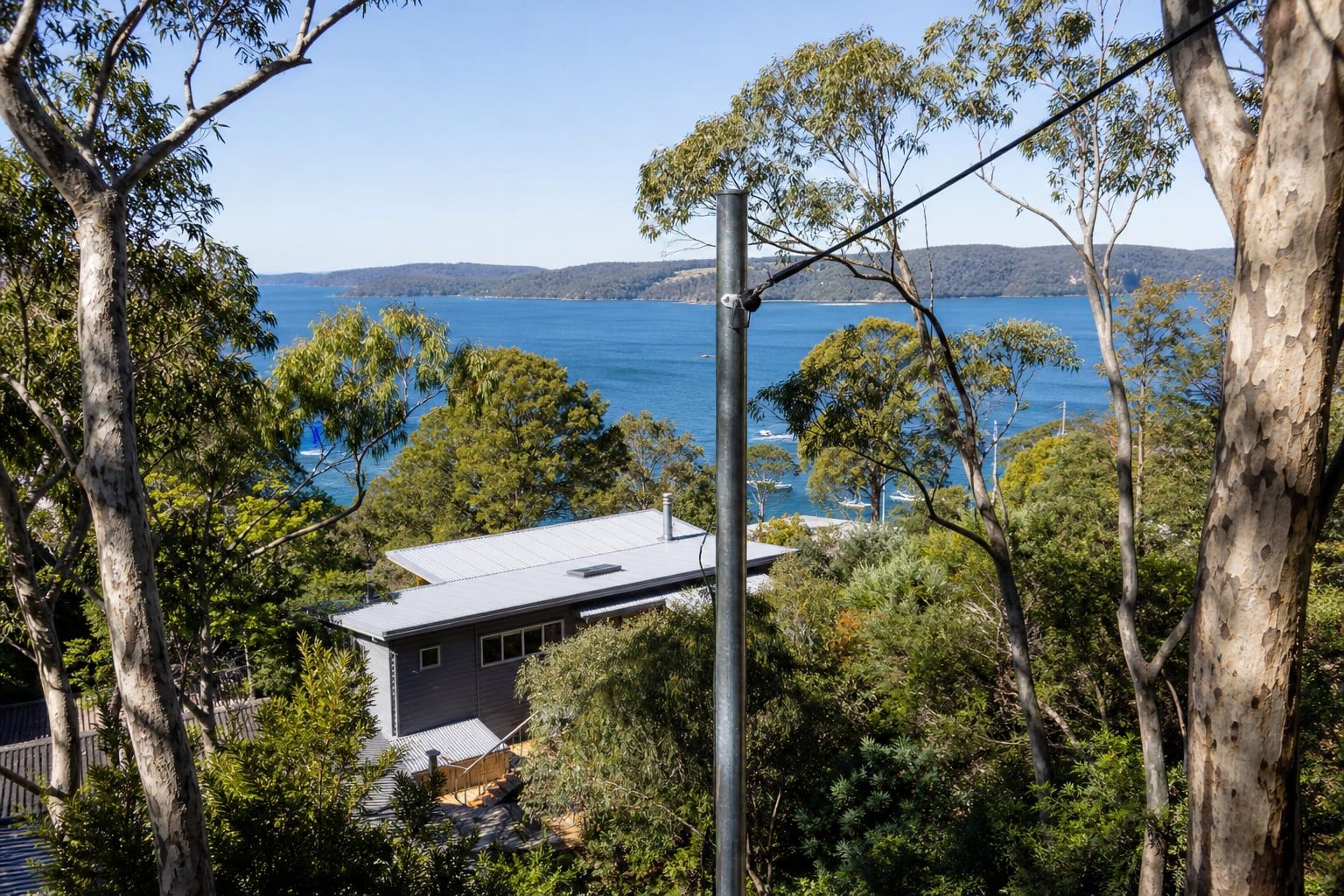
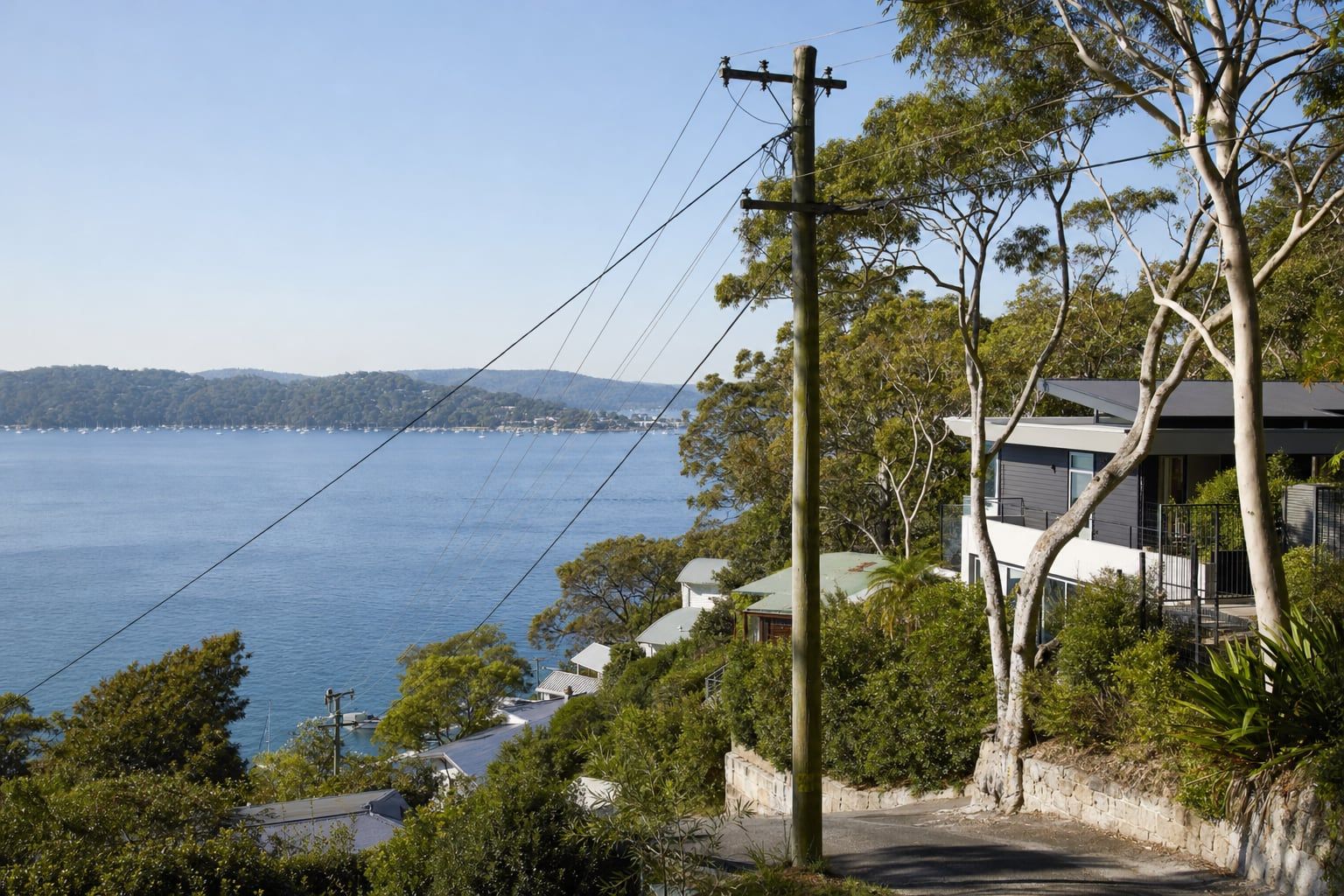
Drive along Pittwater Road past Mona Vale and you’ll see power poles marching up driveways, down bush tracks and across gardens toward homes set well back from the street. Many of those poles aren’t Ausgrid’s. On the Northern Beaches, and especially on the steep, treed blocks of Pittwater, private poles are a fact of life. If one stands on your land, private power pole responsibility usually sits with you. This guide explains what that means, how to keep a pole safe, and what your options are when it reaches the end of its life.
Where the network ends
Ausgrid owns and maintains the street network: the poles along the road and the wires between them. At some point, the supply to your property connects to that network. Everything past that connection point, on your side, is generally the property owner’s. On most suburban blocks, that’s just the service line to the house, the bracket or raiser and the mains to the meter. On long or steep blocks, it can also include one or more poles and spans of line across your land.
If you’re not sure where the connection point is, a Level 2 inspection will tell you.
Why private poles are so common here
The peninsula’s geography makes them inevitable. Homes on the western side of Pittwater sit down long slopes from the ridge road. Battle-axe blocks in Avalon, Bilgola, Newport and Bayview run deep behind the street. Some waterfront homes in Clareville and Church Point sit far below the road. Getting power to them meant poles on private land, and many were installed decades ago.
What owners are responsible for
As owner, you’re responsible for keeping private electrical infrastructure on your land in a safe condition. In practice that means:
- Making sure poles are sound and upright
- Keeping lines clear of trees and vegetation
- Having damage repaired promptly
- Using accredited Level 2 electricians for any work on poles and lines
- Responding to Ausgrid defect notices within the timeframe given
You don’t do the work yourself. Private poles and lines are energised network-voltage equipment, and only accredited Level 2 electricians are allowed to work on them.
How poles deteriorate
Most private poles here are treated hardwood. They last a long time, but not forever.
- Ground-line rot. Moisture at and just below the soil line rots the timber from the inside. The pole can look sound above ground and be hollow below.
- Termites. Bush blocks have plenty, and they’ll happily attack a pole.
- Fittings. Crossarms, bolts, insulators and brackets corrode, more quickly near the water.
- Mechanical damage. Falling limbs, wind loads and vehicles can crack or shift a pole.
- Soil movement. On steep blocks, erosion and slips can undermine a footing.
Warning signs to watch for
From a safe distance, look for:
- A lean, or a change in angle since you last noticed
- Cracks, splits or a soft or hollow-looking base
- Termite mud leads up the pole
- Sagging line, especially over paths, decks, driveways or pools
- Rust on crossarms and fittings
- Branches touching the line
- Erosion around the footing
If you see any of these, book an inspection. If a pole is leaning sharply or a line is low, treat it as urgent.
Inspections
A private pole inspection checks the condition of the timber at and below ground, the lean, the fittings, the line clearances and the vegetation. You get a written report with photos and an estimate of remaining life. It’s a sensible step every few years for older poles, before buying a property with private poles and after a major storm.
Defect notices
Ausgrid inspects lines and can issue a defect notice if private infrastructure is unsafe. A notice describes the problem and sets a deadline for the repair. Don’t ignore it. Send it to us; we’ll inspect, quote, complete the work and give you a certificate to return. Missing the deadline can lead to disconnection.
Your options
Replace like-for-like
A new timber pole in the same position. Good where access allows machinery and the position still works.
Replace with steel
Galvanised steel poles are lighter, can be carried in by hand in sections and don’t rot or attract termites. On steep, bushy Pittwater blocks, they’re often the practical choice.
Re-route
If trees keep threatening the line, or a renovation or pool will be in the way, moving the pole and line to a better route can solve both problems.
Go underground
An overhead to underground conversion runs the supply in conduit from the street pole to the house, removing private poles and lines entirely. It costs more upfront, but it removes the ongoing maintenance, the storm risk and the tree clearance problem.
We price each option so you can compare them. For pole work itself, see private power pole replacement.
Trees and clearances
Lines need clearance from vegetation. On treed blocks, that means regular pruning. Pruning near live lines is dangerous and needs the line isolated or specialist crews. We isolate so your arborist can work, then reconnect. In bushfire-prone areas, keeping the corridor clear is also part of reducing fire risk.
Storms
When a private pole fails in a storm, the line on the ground may still be live. Stay at least eight metres away and keep others back. If street wires are involved, call Ausgrid on 13 13 88. For your private pole or line, call our emergency level 2 electrician service.
Shared poles
Sometimes one private pole feeds two or three homes. Responsibility may be shared between owners. It’s worth agreeing who arranges inspections and how costs are split, and writing it down.
Buying a property with private poles
Standard building inspections rarely assess private electrical infrastructure. If you’re buying on a steep or deep block, ask for a Level 2 inspection of any private poles before exchange. A pole near the end of its life is a cost you’ll want to know about.
Renovating
If you’re renovating the house, check the supply at the same time. A bigger home may need a consumer mains upgrade, and a new deck or pool may clash with the line’s clearances.
Where we see the most private poles
Pittwater has the highest concentration: level 2 electricians Palm Beach, level 2 electricians Newport and level 2 electricians Avalon Beach, plus Bayview, Church Point and Clareville.
Book an inspection
Call the Northern Beaches level 2 electricians for a private pole inspection and written report.
Updated
Private power pole responsibility on the Northern Beaches: common questions
Something else on your mind? Call 02 9158 9937 and ask.
How do I know whether a pole on my land is private?
As a rule, poles past Ausgrid's connection point on your property are private. A Level 2 inspection confirms which poles are yours.
Does home insurance cover a private pole?
Policies differ. Check with your insurer, and keep inspection reports and certificates on file.
Can neighbours share responsibility for a pole?
Where one pole feeds more than one home, responsibility can be shared. It's worth agreeing in writing who arranges inspections and repairs.